

japanese art, design and culture
Spoon-Tamago

Posts from — May 2010

Tenkei Concrete Bicycle Rack

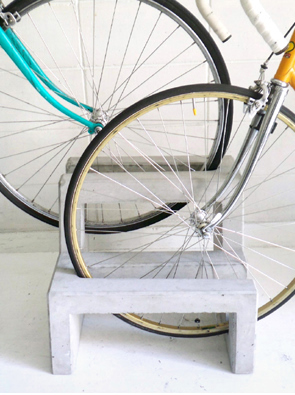
People who find beauty in Japan’s tetrapod-lined shores will undoubtedly be equally pleased with this concrete bicycle rack (7,300 – 12,600 yen). It was designed by the female duo luft for the Tenkei Project, which launched in 2009.


the double and the single

Tenkei (literally “typical form” ) focuses on product design with an emphasis on the following guidelines:
1)    There is no such thing as Tenkei (typical). It is a function of the culture of which it dwells.
2)    Tenkei is: easy to use and easy to produce. A prerequisite is that there is steady demand for production.
3)    Tenkei can take on different variations, effectively expanding its life span.

The contrast between the metallic spokes and the minimal concrete just makes my design heart spin.

May 12, 2010   3 Comments

Paperwood Products by Drill Design

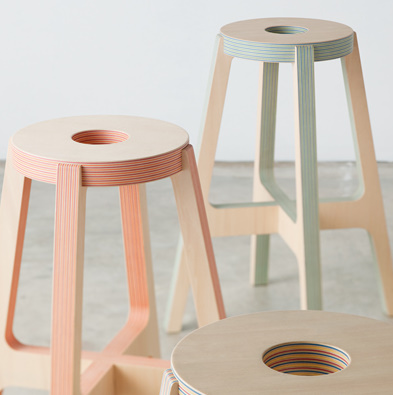
If you will engage in a walk down memory lane, in early April I posted pictures of an experimental new material called Paperwood. The ecologically-sensitive plywood was developed, in part, by Drill Design, and was to become commercially available in 2010. Well, the design unit has recently uploaded pictures of what furniture made from the material might look like.

The stools are on track to go on sale in the Fall of 2010.

May 10, 2010   3 Comments

Ojue bento box from Metaphys

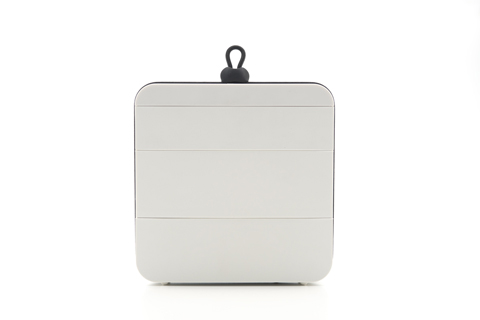
Japanese industrial designer Chiaki Murata’s design firm Metaphys recently announced their latest product design: a snazzy new lunchbox named Ojue. The concept is actually quite revolutionary.

Your typical bento box looks like this (in fact, mine does too, except it doesn’t have ballerinas on it); horizontally-orientated with a large base. However, all my shoulder bags look like this; vertically orientated, and rightly so, to accommodate objects like books and notepads. So when I stuff my horizontal bento box into my vertical shoulder bag it’s not only uncomfortable, but looks lopsided and ugly.

So Ojue (2,800 yen, including the chopsticks) is a welcomed addition to the array of selection when it comes to bento boxes. It includes 3 stacking units that “can be freely combined depending on appetite and physical condition, based on the idea of providing ‘vertical flexibility.’ ”

Take that, old bento box!

Related:

May 6, 2010   4 Comments

Waiting | fruit stands by Masakazu Hori

These are adorable!

Japanese designer Masakazu Hori was kind enough to send over pictures of some of his work he recently showed at Milan Design Week. I think my favorite is “waiting,” a stainless steel fruit (or veggie) stand. They are so cute and remind me of those obedient doggies patiently waiting outside a store for their owner to come back.

After receiving a degree in Industrial Design in 2004, Hori spent four years working as an in-house designer for a leading pet products company in Japan. He established his own office in 2008 and is currently based in Dublin, Ireland. He is an avid pet lover and the influence obviously shows through in his work.

Check out the rest of his portfolio!

May 5, 2010   3 Comments

Glassmic Vase by Norihiko Terayama of Studio Note

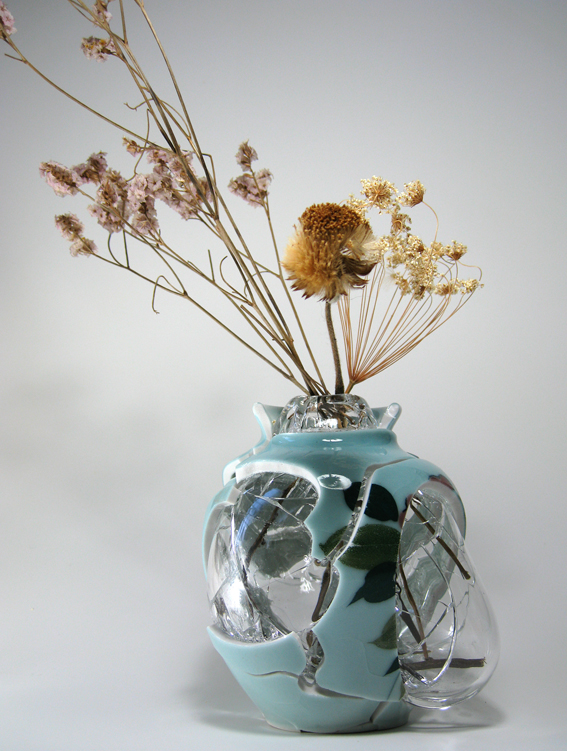
Furthering his explorations into the destructive capabilities of ceramic and glass, Norihiko Terayama, of Studio Note, has created “Glassmic Vase.”

To me, this vase possesses so much energy that I can’t decide if it looks like it has been put back together, or if it looks like it is about to implode.

Related:

May 4, 2010   Comments Off

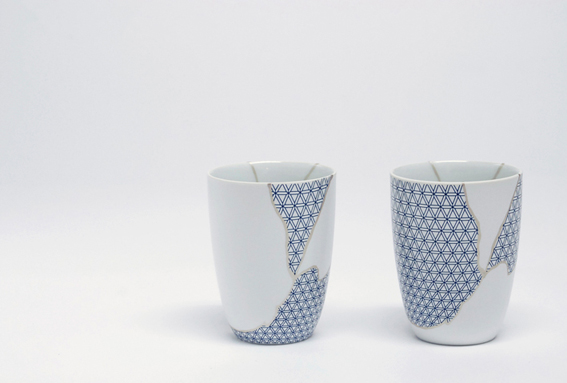
Twotoo by Norihiko Terayama of Studio Note


click images to enlarge

There is a certain Japanese aesthetic that values the incorruptibility of destruction. Sen no Rikyu, the great tea master, believed that the gates of creativity – in its purest form – only open by resisting and destroying existing concepts engraved by our predecessors.

As Japanese designer Masayuki Kurokawa pointed out in his “Eight Manifestations of the Japanese Aesthetic,” “ [destruction] is considered to be a device that interrupts (destroys) the current flow and permits a major leap forward. The idea is that life forces are stimulated by defiance and are realized precisely through the process of destruction.”

Fast-forward to 2010. Norihiko Terayama, of Studio Note, in my opinion, is a designer who often embraces this concept, leading him to create beautiful objects based on the fleeting, destructive cycle of nature (see “related” below). His latest work is Twotoo, a pair of tea cups that have been revived using “tsunagi” (or bonding), a method commonly employed to repair broken ceramic dishes. The silver and gold lines that run throughout the piece, serving as evidence of where the ceramic bond broke, writes Terayama, often results in a deep attachment that surpasses the beauty of its previous form.

Related:

May 4, 2010   6 Comments

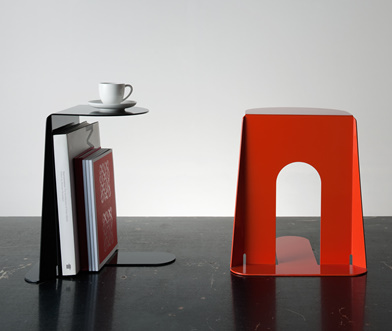
Bookend Table by Homeswork


photos by takumi ota

Homeswork is the new collaborative design unit between Drill Design (comprised of Yoko Yasunishi and Yusuke Hayashi) and architect Keiji Ashizawa. While, for obvious reasons, their portfolio is still scarce, I’m loving what I’m seeing. The Bookend table is made from a single sheet of iron that was then folded and cut. I think it would look great on a desk or even on a floor.

Related:

May 3, 2010   Comments Off